Designing EconoGlance: A Case Study
How I designed EconoGlance for the way Pakistan and the Gulf share money: kametis, trip pots, AI receipt scanning, what Apple's review taught me and what I cut.

Shaheer Malik
Framer Designer & Developer
Quick answer
EconoGlance is a bill-splitting app I designed for how Pakistan and the Gulf actually share money: kametis, trip pots, cash and family groups. This case study covers the problem, the people it serves, the design principles, the features, what I cut after Apple's review, and honest results so far.
Last updated: 2 October 2026
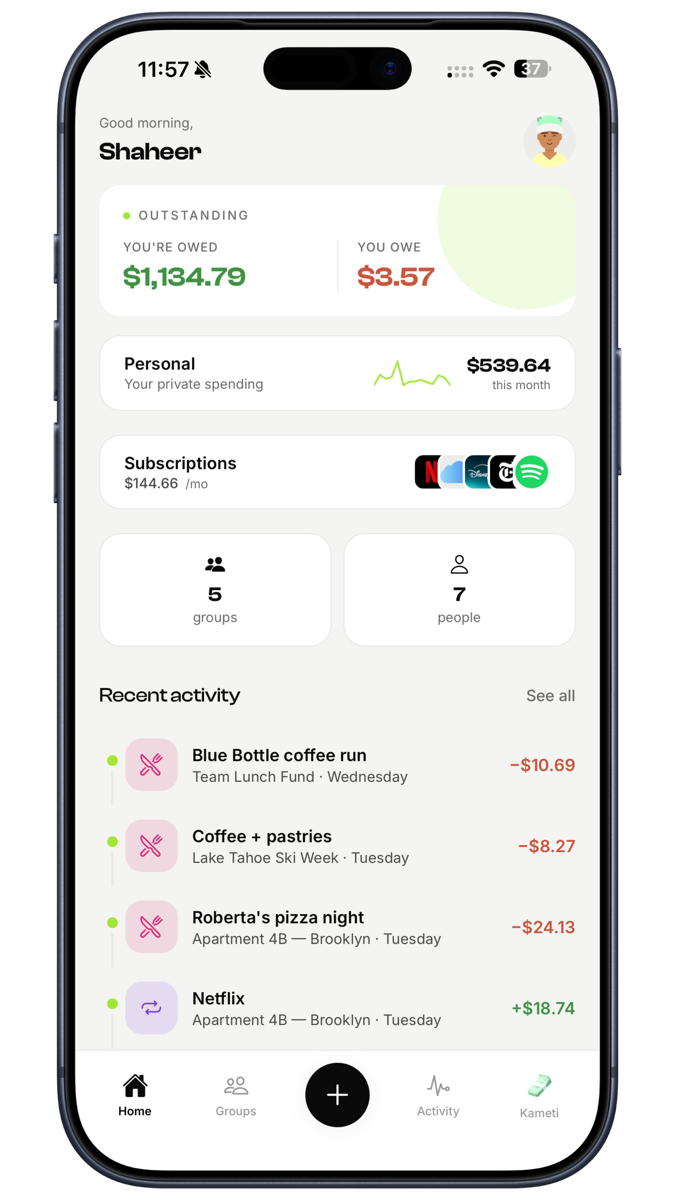
EconoGlance is a bill-splitting app I designed and built for the way people in Pakistan and the Gulf actually share money. That means flatmates and trips, but also kametis, cash, family money and group pots that one tired person usually tracks in a notebook.
This case study covers the problem, the people it was designed for, the decisions that shaped each feature, what I cut, what Apple's review taught me, and honest results so far. It is written for founders and product teams deciding how to design a money product that people trust.
What problem was EconoGlance designed to solve?
EconoGlance was designed to make shared money visible to everyone involved, so nobody has to remember it, chase it or argue about it. The category already existed. What did not exist was an app built around how shared money works in South Asia and the Gulf.
Splitting apps are a proven habit. Splitwise had 28,340 ratings on the US App Store when I checked on 1 October 2026. bunq reported that Tricount users split almost €16.4 billion in 2024, across nearly 16 million users (bunq, January 2025).
But those apps were designed around a European or American idea of shared money: a dinner, a trip, a flat. In Pakistan, a huge share of shared money runs through rotating savings committees, called kametis or BCs. Oraan, a Pakistani fintech, reported in its own 2018 research that 41% of Pakistanis take part in one. And the diaspora that funds so much of it is large: Pakistan received a record $41.6 billion in remittances in 2025-26, led by Saudi Arabia and the UAE (State Bank of Pakistan data, July 2026).
| Need | Typical splitting app | EconoGlance |
|---|---|---|
| Split a dinner or a trip | Yes | Yes, five split methods |
| Run a kameti or savings circle | No | Yes, with agreement, ledger and draws |
| A shared trip pot with a manager | Rarely | Yes, Trip Deposit |
| Read a receipt and split it by item | Paid tiers, varies | Yes, AI scan on Pro |
| Bring years of Splitwise history | No | Yes, direct CSV import |
Who was it designed for?
EconoGlance was designed for four people, each of whom ends up as the unpaid bookkeeper of their group.
- The flatmate who pays the landlord. They front the rent and the bills, then chase everyone else every month.
- The trip organiser. They book the hotel, collect money in cash and get blamed when it does not add up.
- The kameti organiser. Usually a mother, aunt or senior colleague, keeping a notebook that only they can see.
- The overseas Pakistani. Paying into a family kameti from Dubai or Riyadh, without being in the room for the draw.
Designing for one specific person at a time kept the screens honest. My test for every screen was simple: can someone standing outside a restaurant, with friends waiting, understand it in one glance?
What design principles shaped the app?
Three principles decided most of the arguments I had with myself.
- The app remembers, not the person. Every feature exists to move a memory out of someone's head and into a record everyone can see.
- Ten seconds to add an expense. Expense tracking is a habit, and habits die from friction. The common action has to be the fastest one.
- A number on screen must always reconcile. In a money app, one wrong balance destroys trust in every other number.
"Money features don't get to be mostly right. If a balance is off by one rupee, nobody trusts any of the numbers."
Shaheer Malik, founder of EconoGlance and Senior UI/UX Product Designer
How did the key features take shape?
Each major feature started as a notebook, a WhatsApp habit or an argument I had seen, and was designed to replace it.
Kametis and savings circles
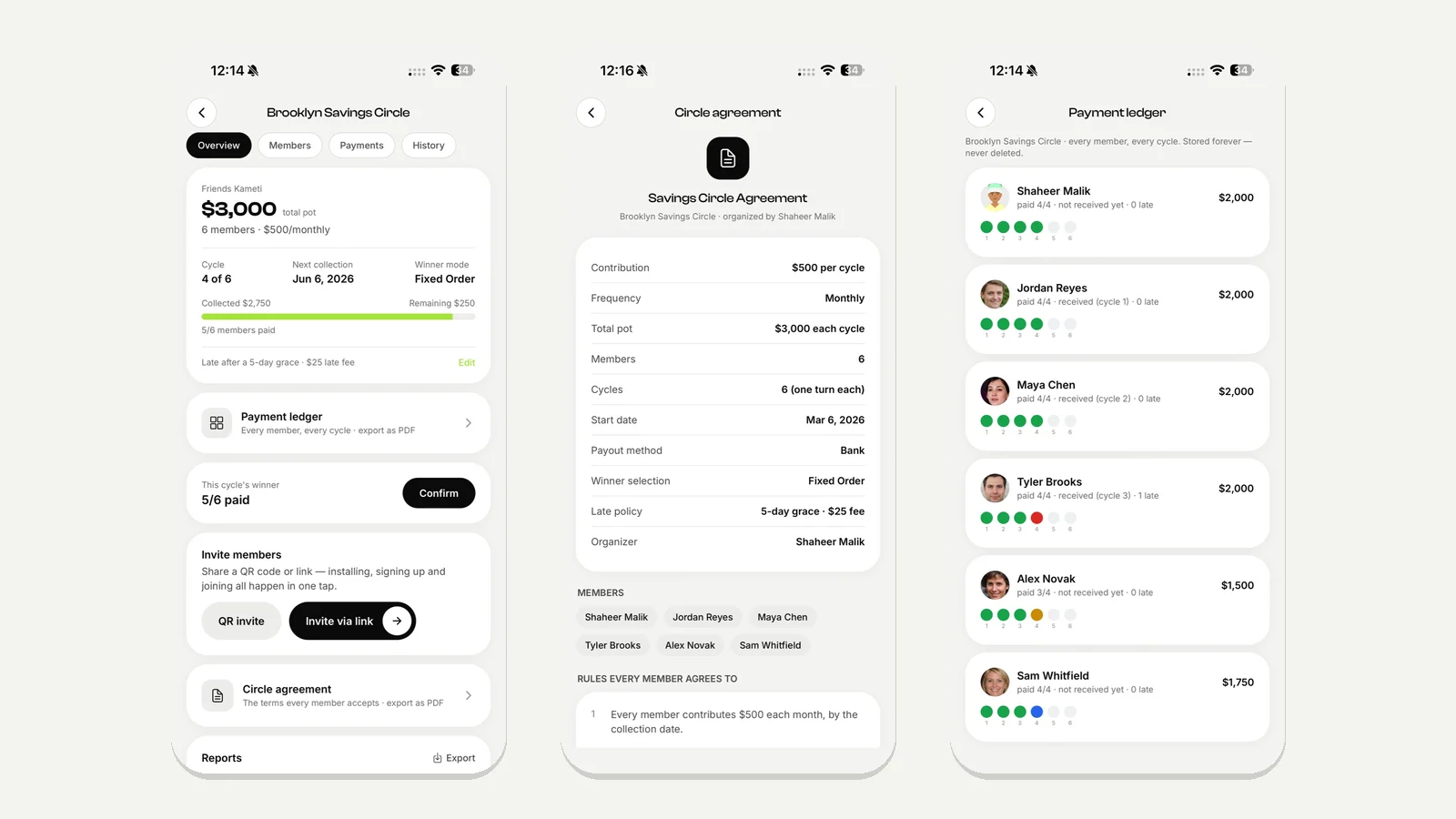
The kameti feature replaces the organiser's notebook. Each circle has a written agreement every member can see and export as a PDF, a payment ledger showing who paid each round, and a payout method chosen up front: fixed order, a lucky draw every member sees, the organiser's choice, a quiz, or emergency priority, where members request an early turn and the group votes.
Bidding, where members pay a discount to receive the pot early, was designed but is deliberately not shipped. More on why below.
AI receipt scanning
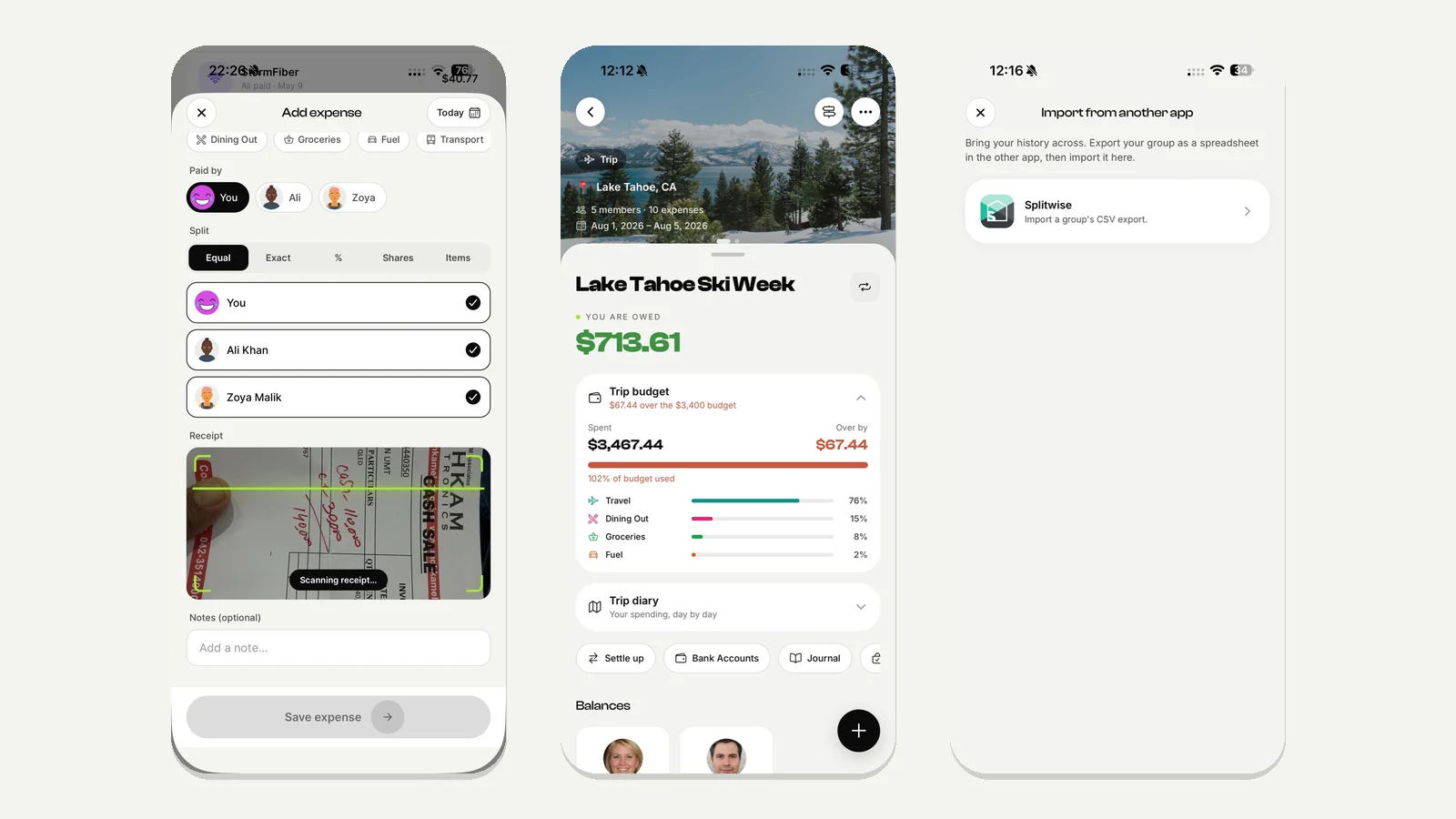
The scanner turns a receipt photo into line items you can split by person. On the phone, the photo is compressed and its location metadata is stripped before upload. A vision language model returns structured fields with a confidence score for each, and the app then checks that the line items, tax and total actually reconcile. Anything below 90% confidence, or any receipt that does not add up, is flagged for review instead of being split blindly.
Trip Deposit
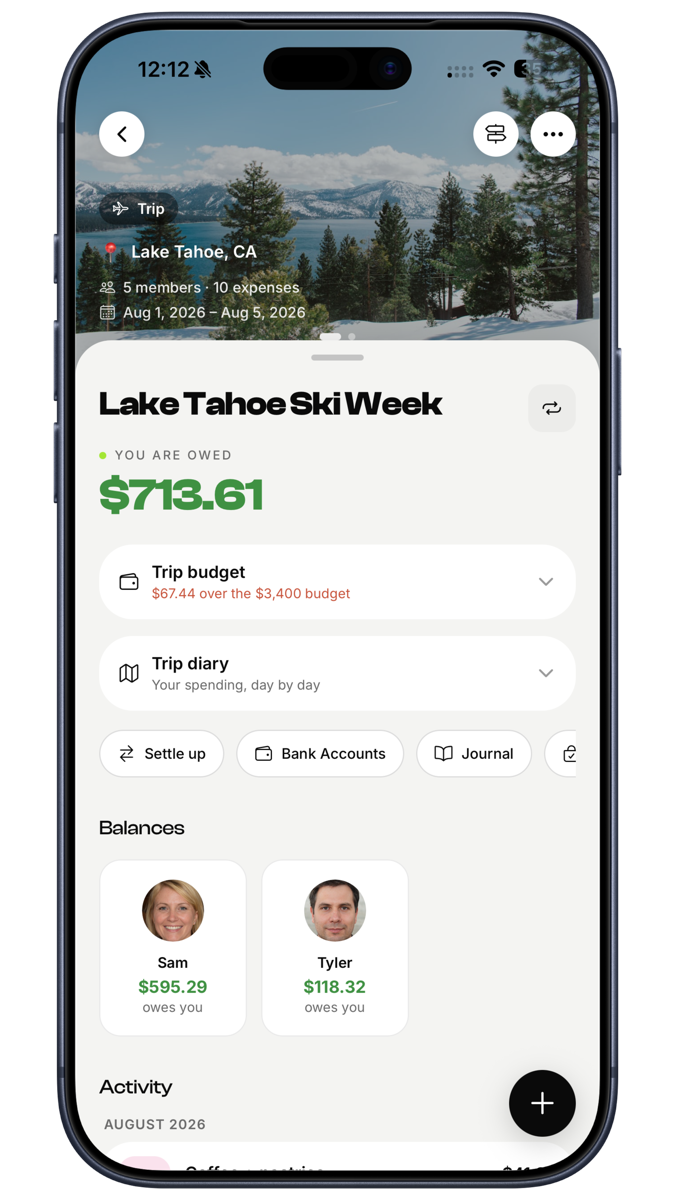
Trip Deposit is a shared pot for a trip: everyone pays in before you go, shared costs come out of the pot, and a Trip Manager approves spending. The hard design problem was fairness when people contribute different amounts and use different things. The rule I landed on is simple to explain: what you get back is what you put in, minus what you actually used. Everyone's refundable amounts always add up to exactly what is left in the pot, and the ledger is append-only, so a mistake is reversed in the open rather than edited away.
Switching from Splitwise
People do not stay with an app out of loyalty. They stay because of their history. So EconoGlance imports a Splitwise group from its CSV export and rebuilds the expenses, members and settlements, without touching the original data.
What did I cut, and why?
Some of the best product decisions on EconoGlance were removals.
| Removed | Why |
|---|---|
| "Coming soon" importers for other apps | Apple's review rejected them as incomplete features. They were right: a button that does nothing breaks trust. |
| Kameti bidding, shown as "soon" | Same lesson. It returns only when the full flow ships. |
| Storing payment cards in the wallet | It made a splitting app feel like a bank app, which is not what people came for. |
The App Store rejection was the most useful review the product has had. It forced a rule I now apply everywhere: if it does not work yet, it is not on the screen.
How is it built?
EconoGlance is a React Native app built with Expo, on a Supabase backend, shipping to iPhone and Android from one codebase.
| Layer | Choice | Why it matters for a money app |
|---|---|---|
| App | Expo and React Native | One codebase, and most fixes ship as over-the-air updates |
| Data | Supabase Postgres with row level security | The database, not the app, decides who can see what |
| Money rules | Server-side functions | Balances and refunds are enforced on the server, not trusted from a phone |
| Languages | 11, including Urdu and Arabic | Family members can use it in the language they think in |
What are the results so far?
EconoGlance is live on the App Store and Google Play, and version 2.0 is the current iPhone release. It has no US App Store ratings yet, and I would rather say that plainly than dress it up.
The clearest early signal came from search. The site's guides on kametis and savings circles became its strongest non-brand pages in Search Console, with Pakistan delivering most of the clicks. That told me the kameti bet was right: the niche that no big app serves is the one people are actively searching for.
What would I do differently?
I would build the kameti feature first, not after the splitting basics. It is the part of the product nobody else does, and the part people search for.
I would also write the money tests before the money screens. The Trip Deposit rules only became trustworthy once every edge case, from someone using more than they paid in to an expense deleted after the pot paid for it, was checked against the server before release.
If you are designing a fintech or shared-money product, the full product page is at EconoGlance, another mobile AI case study is Headlyne, and you can talk to me about your product.
Frequently asked questions
What is EconoGlance?
EconoGlance is an iPhone and Android app for splitting shared expenses, running kametis and savings circles, and managing shared trip pots. It scans receipts with AI and imports Splitwise history.
Who designed EconoGlance?
Shaheer Malik designed and built EconoGlance. He is a Senior UI/UX Product Designer and Framer developer who has delivered more than 75 product, brand and Framer website projects.
How is EconoGlance different from Splitwise?
Both split shared expenses. EconoGlance adds kametis and savings circles, Trip Deposit pots, AI receipt scanning on its Pro plan and a direct import of Splitwise history.
Is EconoGlance free?
There is a free plan with no ads and every split method, capped at 3 expenses a day and 1 group you create. Pro is $4.99 a month after a 3-day trial.
Does EconoGlance hold users' money?
No. EconoGlance is a shared record of money. Payments happen through people's own banks, wallets or cash.
What was the hardest design problem?
Making shared pots fair when people contribute and use different amounts. The answer was a simple rule, put in minus used, enforced on the server so every balance reconciles.
Last updated: 2 October 2026. Questions about designing a money product? Talk to Shaheer on the contact page or book on Contra.
FAQ
Frequently asked questions
EconoGlance is an iPhone and Android app for splitting shared expenses, running kametis and savings circles, and managing shared trip pots. It scans receipts with AI and imports Splitwise history.
Want it done for you? I offer product design on a fixed price, from $700. See pricing.