Design service
Product Design
End-to-end product design for SaaS and AI startups: flows, wireframes, high-fidelity UI, and the design system that keeps your product consistent as it grows.
Quick facts
- Response timeWithin 24 hours
- Typical timeline2–6 weeks
- PricingFixed, no surprises
- Track record75+ projects · 4.93 ★

What working together actually looks like
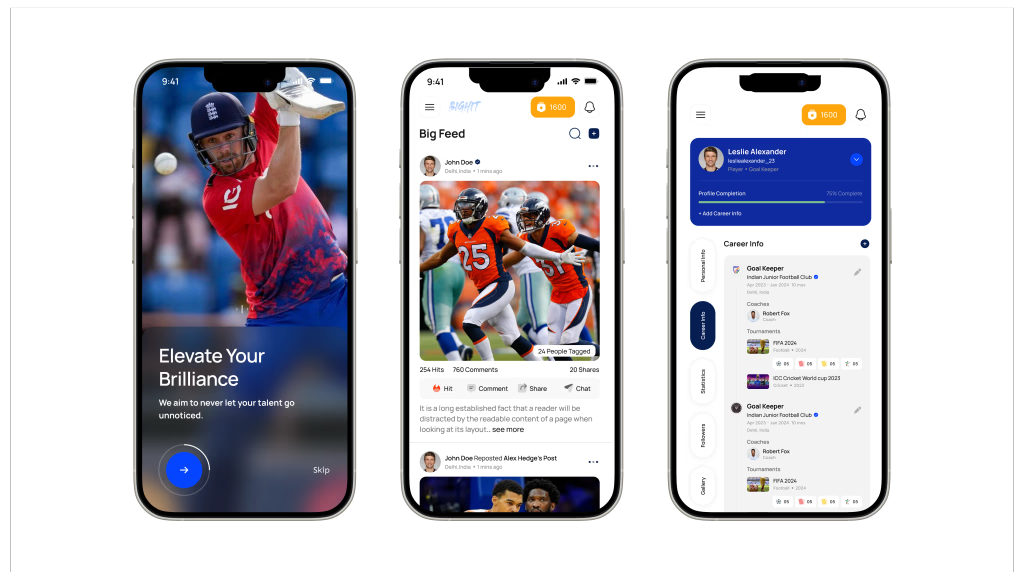
Product design is where most startups either find their footing or quietly stall. A polished screen means nothing if the flow around it loses users, so I start from the job your product has to do and design backwards into the interface. That means real flows, wireframes that settle structure before any styling, and high-fidelity UI that is engineered to convert and retain rather than just to look impressive in a pitch.
The work ships production-ready, not as a deck. You get a design system and component library your engineers can extend, the empty, loading, and error states most designers skip, and dev-ready specs that make the build predictable.
Because I design for SaaS and AI products day to day, the decisions reflect how these products actually behave under real use, so the experience holds up once people are inside it, not just on the marketing site. This suits founders preparing for a launch, a raise, or a redesign, and technical teams that want senior product thinking without a full-time hire. Most product engagements run two to six weeks depending on scope, always quoted fixed before any work begins.
Need one designer for a defined piece of work? You can hire a remote product designer for one fixed 14-day sprint.
Not sure what to fix first in a product you already have? A 3-day UX audit finds it for a fixed $499, and the $499 comes off a sprint booked within 30 days.
Built for
SaaS and AI products preparing for launch, a raise, or a redesign
Built for
Founders who need senior product thinking, not just polished screens
Built for
Teams whose current UI is costing them conversions and demo calls
What you get
How we'll work
A process built for speed
Scope
A short call or brief; you get a fixed quote and timeline within 24 hours.
Design
Direction first, then high-fidelity screens in fast review loops.
Build
The same hands that designed it write the code. No drift.
Launch
QA, performance, SEO, and a handover your team can own.
Why this works
Why startups pick me for product design
Senior-only, always
No juniors, no outsourcing — the expert you hire is the expert who delivers.
Days, not months
First designs within days; most projects live within 2–6 weeks.
One accountable owner
Design and development under one roof means one timeline and one name on the result.
“Shaheer has been one of the best freelance web design / developer contractors I've ever worked with. Great attention to detail, good creative sensibilities, fast turnaround and revisions as necessary. Will absolutely work with him again.”
 Joshua Otten · CEO, NIL Data Solutions AI
Recent work
Proof in production
Product Design, in short
Product design from me covers every screen, including empty, error and loading states, a component library and a clickable prototype. The fixed-price way to buy it is the 14-day product design sprint at $1,999. It is design only, for teams that already have developers; if nobody is building it yet, a build sprint fits better.
The 14-day plan, day by day
Product design in 14 days: $1,999, on a schedule you get before you commit.
Days 1–2
Flows
The journeys that matter, mapped before anything is drawn. What the product does, in what order, and which screens actually exist.
Days 3–8
Screens
Every screen designed against real content. You see the core flow first, so anything I have misread surfaces while it is still cheap to change.
Days 9–11
States and system
The parts nobody designs — empty, loading, error, partial — plus the component library the build will be made of.
Days 12–14
Prototype and handover
Wired into a clickable prototype, the file organised and documented, and a call with the people who have to build it.
What the $1,999 includes
- Every screen designed — flows, empty states, errors, loading, not just the happy path
- A component library your developers can build against
- A clickable prototype, real enough to test and to show investors
- Mobile and desktop where the product needs both
- A handover call with whoever is building it
- The decisions written down beside the screens, not just the screens
- The Figma file is yours, organised, at handover
- Two rounds of revisions inside the fortnight
Situations this fixes
Engineers designing by default
A capable engineering team is shipping features while inventing the interface as they build, so the product works but feels like five different products depending on the screen.
Every screen is designed up front against one component set, so the team builds from a decided design rather than deciding it at four in the afternoon.
A demo that has to hold up in a room
A founder has a pitch in a fortnight and a product that is either half-built or entirely hypothetical, and screenshots of a real-looking interface will decide how the conversation goes.
A clickable prototype lands inside the window — real enough to walk through on a screen share, without anyone having to build the backend first.
The happy path is the only path
A product has been designed for the demo — the version where data exists and nothing fails — and every empty, loading and error state is being improvised in code.
The states nobody designs are part of the scope here: first run, empty, loading, partial, failed and offline, all decided before they become bug reports.
An agency with the client but no designer
An agency has won work they can build but not design, and subcontracting the design usually means losing control of the timeline.
Fixed scope, fixed fortnight, fixed fee, with a Figma handover their developers can work from — and I stay invisible to their client if that is how they want it.
Figma that nobody can build from
A team has a design file from a previous freelancer that is a scatter of loose frames with no components, no naming and no record of why anything was decided.
The handover here is organised and built on components, with the decisions written down next to the screens, so it survives the person who made it leaving.
Three ways to get product design done
| Compare | The 14-day design sprint | A full-time designer | A design subscription |
|---|---|---|---|
| What you buy | A designed product: every screen, a component library, a prototype | Ongoing design capacity, on payroll | A month of capacity, one request at a time |
| Price shape | $1,999 once, fixed | A salary, plus the time it takes to hire | A monthly fee for as long as you subscribe |
| Time to a finished design | 14 days, on a written schedule | After hiring and onboarding | Depends on the queue |
| Best for | A v1 or a redesign with a finish line | A product with years of design work ahead | A steady stream of small requests |
What the first year costs
| Item | Cost | Notes |
|---|---|---|
| Product design sprint | $1,999 | Once, fixed, 14 days, two revision rounds |
| Discovery, if v1 is still unclear | $700 | 5 days; comes off a build sprint booked within 30 days |
| Figma for a designer on your team | $192 a year per full seat | Professional plan, $16 a month billed annually |
| Figma for your developers | $144 a year per dev seat | $12 a month billed annually, for inspecting designs |
| Building it | Your developers, or a build sprint | Web app sprint from $1,999; app sprints from $2,500 |
On Figma's paid plans, other people can view and comment on your files without buying extra seats. Figma prices checked on 28 October 2026, before tax.
When product design alone is the wrong move
- Nobody is going to build it. A Figma file is not a product, and the build sprints include design.
- You do not know what the product is yet. Start with the 5-day discovery sprint; designing an undecided product is the most expensive way to decide it.
- Retrofitting a design system across a large existing product, which is a project of its own.
- Pixel-matching a competitor. A reference is welcome; it is not the brief.
Questions to ask before you hire a product designer
These answers show whether you will get screens or a product your developers can build.
- Do you design the empty, error and loading states?
- Most real problems show up there. A design with only the happy path leaves developers guessing.
- Will my developers get a component library?
- Screens built from shared components are what make a design buildable rather than just presentable.
- Where are the design decisions written down?
- Beside the screens, so the reasons survive the handover and the next designer.
- How many revision rounds are included?
- Get the number in writing before you start.
- What if we are not sure what v1 is?
- Then the honest answer is discovery first, not design.
What your developers receive at handover
The handover is built for the people who will write the code, not for a presentation.
- An organised Figma file in your account, with pages and layers named so they can be found
- A component library the screens are built from, so each part is designed once and reused
- Every screen in its empty, error and loading states, not only the happy path
- A clickable prototype of the main flows, real enough to test with users
- The design decisions written beside the screens, so the reasons survive the handover
- A handover call where your developers ask their questions before they build
What to have ready
- A clear v1 scope, or the discovery sprint first
- Who will build it, so the component library suits their stack
- Your developers available for the handover call
- Any brand guidelines, existing screens or flows the design should build on
Common questions
Product Design, answered
Every product design project is quoted fixed before work starts — most engagements land between $1,900 and $10,000 depending on scope. Send a brief and you'll have a number within 24 hours.
Typically 2–6 weeks from kickoff to delivery. Focused engagements (a single page, flow, or sprint) can ship in as little as one week.
One senior expert handles both design and delivery — no handoff, no drift. 75+ projects shipped, 4.93★ across 32 Contra reviews, and clients including YC-backed Unlayer.
Yes — most clients are SaaS and AI startups in the US and Europe. Based in Dubai, I overlap comfortably with US, EU, and GCC working hours.
You do. It is organised and handed over at the end of the sprint, with the design decisions written beside the screens.
Two rounds inside the 14 days.
Yes, where the product needs both. Say which on the call so the screens are planned for them from the start.
To inspect designs in Dev Mode, yes: a Professional dev seat was $12 a month billed annually when I checked on 28 October 2026. Viewing and commenting are free on paid plans.
Related services